
- Home
- International Programme
- Publications
- Colloquiums
- Seminars
- Blog
- IJATM
- Young Author Prize
Stop focusing on the 2035 deadline and get to the heart of the matter: von der Leyen and Séjourné's winning strategy
The weekly column by Bernard Jullien Former director of Gerpisa, associated professor at the University of Bordeaux.
We were promised a fierce battle between the pro-2035 and anti-2035 camps. In two days, the Commission seems to have succeeded in shifting the debate by proposing three things: i) revisiting the battery issue to boost this rocket which was in danger of remaining grounded, ii) finally giving serious consideration to the legitimate demand for local content requirements, and iii) vigorously promoting the production of affordable electric vehicles. Based on the integration of requests from various stakeholders, including manufacturers, this set of proposals is a very attractive basis for a fresh start. It has the merit of bringing everyone to a point that seems less insurmountable.
The first phase of the strategic dialogue on the automotive sector was launched in January 2025 by Ursula von der Leyen (UVL) to draw conclusions from the European elections and, above all, from the annus horribilis that was 2024, both for the automotive industry as a whole and for electric vehicle sales in particular.
The Commission had then strived to cover a very wide range of issues in a very “Brussels” style, allowing all stakeholders to express their views and find traces of their wishes in the final document. The Draghi report, requested, let us recall, by UVL, was still fresh at the time, and the most optimistic hoped that some of its proposals would serve as a guide for the discussions. This was not the case. Le Monde reports that, exasperated, Iratxe Garcia Pérez, the president of the Social Democrats (S&D), who, along with Manfred Weber, leader of the EPP group, and Valérie Hayer, president of the Centrists, belongs to the coalition that got the UVL elected, said to her: “You buried the Draghi report on a golf course,” referring to the UVL's trip to Scotland on July 27, where negotiations between Brussels and Washington were concluded.
And, in fact, the only concrete decision that was taken to follow up on this phase 1 was to give manufacturers the flexibility they were demanding. This resulted in the feeling that, although UVL had saved his seat, the situation had changed and forced the new commission to take into account the opposition of an increasingly large fringe of the EPP to the ‘ban’.
In September, the situation had not changed radically, but tensions had intensified within the coalition and Friedrich Merz, who belongs to the fringe of the EPP that has the most difficulty supporting UVL, became Chancellor.
Manufacturers and equipment suppliers continued their efforts to challenge the 2035 deadline and promoted the idea that their victory in 2025 foreshadowed a review of the “review clause” that could only lead to a more ‘realistic’ timetable and/or more “flexible” provisions. The result at the end of this summer is that pro-electric advocates, who had hoped that the flexibility obtained by Luca De Meo, then President of ACEA, would be the last concessions made to manufacturers so that the CAFE requirements for 2030 and 2035 could be firmly reaffirmed, are now convinced that they have been defeated.
In support of Mercedes boss and ACEA president Ola Källenius, who considers the 2035 target “unattainable,” are almost all manufacturers with an industrial presence in Europe, except for China's Volvo Cars. Oliver Blume, CEO of the Volkswagen Group, considered it “unrealistic” to aim for 100% electric car production within ten years, stating:“Decarbonization is the goal. But we must not strangle the industry.”
Matthias Zink, CEO of Schaeffler Automotive Technologies and president of Clepa, and Friedrich Merz are on the same page, and so we are seeing a fairly strong “German unity” on this issue.
In France, Jordan Bardella and François-Xavier Bellamy continue to believe that supporting UVL on this issue, as on many others, is a disaster.
However, they are not the only ones to speak out on the subject of 2035, and Le Figaro points out that French elected officials whose constituencies are home to car factories (Xavier Bertrand, Dominique Estrosi Sassone, Franck Dhersin, Olivier Becht, Alain Cadec, Annick Jacquemet, etc.) are also making their voices heard by sending an open letter to UVL, which reads
: "We, parliamentarians from all sides, call for a European wake-up call to avoid a predicted disaster. We support the goals of carbon neutrality and sustainable mobility. But achieving these goals must not come at the cost of the collapse of the European automotive sector. We are talking about thousands of jobs in France and millions of jobs in Europe! Continuing on the current trajectory means running the risk of closing down manufacturers' and suppliers' factories, increasing the cost of vehicles for the middle classes, and abandoning the European market to foreign manufacturers alone."
So when, after the Munich Motor Show, where a manufacturer like Renault caused a buzz with its Clio 6 combustion engine model, the strategic dialogue for the sector was launched last week, we expected the EU's electric ambitions to be scaled back significantly. This was the fear of all environmental NGOs. It was also the fear of manufacturers who believed in European commitments and do not see how taking a step back could lead to a better leap forward. Thus, in a letter sent to the EU on Monday, May 8, 150 companies, including manufacturers (Volvo, Polestar), battery manufacturers based in Europe (notably France's Verkor), charging operators, material suppliers, and network operators, wrote: "Hold fast, don't back down. Maintain the zero-emission target for 2035. Our companies have committed hundreds of billions of euros in new investments and have already created more than 150,000 jobs. Delaying the 2035 target [...] would erode investor confidence and give a permanent advantage to global competitors."
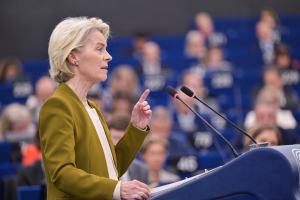
After hearing the President of the Commission's State of the Union address to the European Parliament in Strasbourg on Wednesday and learning about what was said on Friday at the opening of the strategic sectoral dialogue, the impression that emerges is that everything has been done to avoid a repeat of what happened in early 2025, when all the debate focused on the 2035 deadline and nothing else was agreed.
Basically, the Commission's game was to act as if CLEPA and ACEA had already been heard and/or were so certain to be heard that we could move on to other matters. There will indeed be a working group to define what is meant by the term “carbon neutral,” which will pretend to reopen the door to VHRs, range extenders, biofuels, and e-fuels. The highly dishonest and highly unreasonable demand for “technological neutrality”—a smokescreen for a futile request for a reprieve for combustion engine vehicles or the swan song of a stillborn hydrogen industry—is thus honored, and we can move on to the next issues.
However, the next issues are substantial and deserve the full attention of EU manufacturers, companies, and Member States. Since, even when asking for flexibility and/or delays, all manufacturers say they believe in electric vehicles, both UVL and Séjourné propose that we work to make the sector sovereign and vehicles accessible and—therefore—sufficiently numerous so that sales volumes become somewhat substantial again and the ongoing social catastrophe has some chance of being curbed.
Faced with battery manufacturers asking for more help to give them time to develop a competitive European offering, equipment manufacturers expressing their dismay, and carmakers indicating that affordable vehicles could return to their catalogs with a few regulatory adjustments and the creation of a new category of vehicles, it seems as if the Commission is proposing to say “banco”: let's stop focusing on the symbol that the ‘ban’ has become and address the issue of building/defending the European battery industry, let's accept that our industry is subject to local content requirements equivalent to those formulated by all the major automotive regions, and let's seriously examine the requests of manufacturers and stakeholders who have pointed out the absolute necessity of being able to reintroduce small vehicles costing less than €15,000, which were still in the catalog 10 years ago.
From 2030, all manufacturers will have to meet CAFE targets, which they have some reason to be concerned about. This is because the growth in electric vehicle registrations is not quite what was hoped for. It is also because the regulations have “reversed the trend”: previously, the more heavy vehicles you sold, the more CO2 you could emit; now, the opposite is true, and manufacturers have an interest in reducing the average weight of their registered vehicles.
This, combined with the possible creation of a new category benefiting from a favorable regulatory and tax regime and likely to be supplemented by super-credits, could quickly come into being to allow vehicles that are already in the pipeline or about to be added to catalogs to benefit from very powerful boosters. By proposing, on a European basis, to reattack the electric vehicle market from the bottom up, where it had been attacked from the top down, the industrial and political cards are being reshuffled. A large part of the industry and governments are ready to take the gamble. If, within a reasonable timeframe to which they would commit, manufacturers can organize themselves so that the batteries of these vehicles and 90% of their value are European, then we would begin to break out of the rut.
The weekly column by Bernard Jullien is also on www.autoactu.com.

User login
Navigation
Agenda
|
Colloque du Gerpisa
Monday, 15 June, 2026 - 08:00 - Thursday, 18 June, 2026 - 18:00
|
|
Appel à communication
Monday, 15 June, 2026 - 08:00 - Thursday, 18 June, 2026 - 18:59
|
|
Journée du Gerpisa
Friday, 2 October, 2026 - 14:00 - 16:00
|


